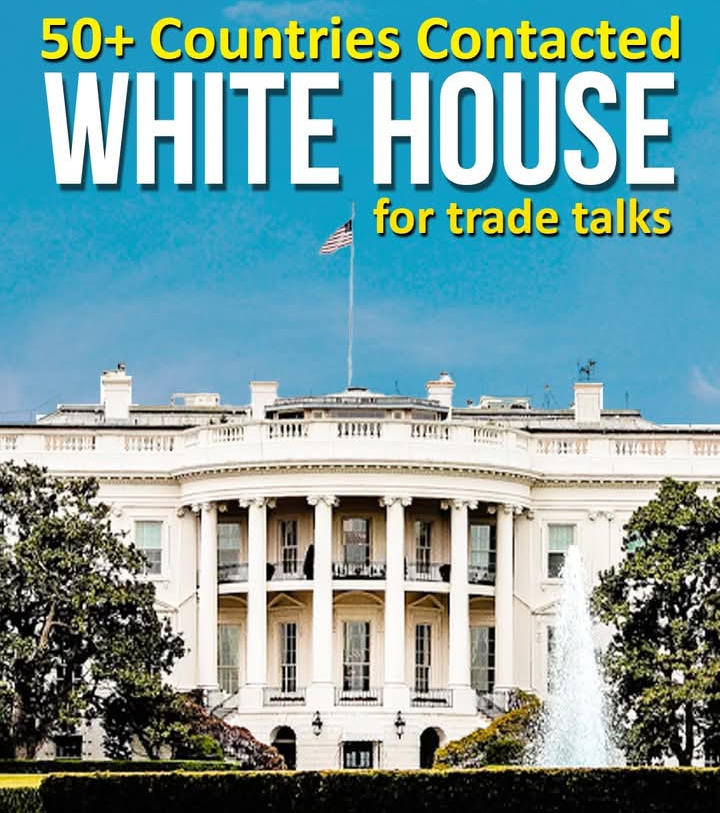
Over Fifty Countries Seek Trade Talks with White House Following Trump’s New Tariffs
In a dramatic shift in global trade dynamics, over fifty countries have reached out to the White House to initiate trade negotiations following U.S. President Donald Trump’s introduction of sweeping new tariffs. Treasury Secretary Scott Bessent confirmed in a news interview that since last Wednesday’s announcement, more than 50 nations have commenced talks with the U.S., placing President Trump “in a position of power.”
Trump Administration Defends Tariffs Amidst Market Chaos
Despite the administration’s staunch defense of the new tariff policy, the decision has had immediate financial repercussions. The U.S. stock market saw a staggering $6 trillion wiped off its value last week. Nonetheless, top Trump administration officials remain resolute, asserting that the tariffs are a long-term strategy for economic stability and prosperity.
Treasury Secretary Scott Bessent emphasized that addressing unfair trade practices is not something that can be negotiated overnight. “These are systemic issues that require time to resolve,” he stated. He further noted that the U.S. will evaluate offers from affected countries and determine their legitimacy.
Meanwhile, President Trump, who spent the weekend playing golf in Florida, reassured the public via social media: “WE WILL WIN. HANG TOUGH, it won’t be easy.”
Trade War Escalates as Countries Retaliate
The U.S. tariffs, set to take effect on Wednesday, have already prompted strong reactions from both allies and adversaries. Nations such as China have retaliated swiftly, while others are scrambling to negotiate favorable terms.
White House economic adviser Kevin Hassett acknowledged the growing international backlash but remained optimistic. “Yes, countries are angry and retaliating, but they are also coming to the table to negotiate,” he remarked.
One surprising inclusion in the affected list is Israel, an American ally now facing a 17% tariff. Israeli Prime Minister Benjamin Netanyahu is scheduled to visit the White House to discuss this issue, along with geopolitical concerns such as the ongoing war in Gaza. Another impacted ally, Vietnam—a major manufacturing hub for textiles—has also reached out to Washington. According to President Trump, Vietnam’s leader expressed a willingness to reduce tariffs to zero in exchange for a broader agreement with the U.S.
In Europe, Italian Premier Giorgia Meloni voiced her disagreement with Trump’s tariffs but affirmed her readiness to engage in negotiations to protect Italian businesses.
Political Division in Washington Over Tariffs
While Trump’s Republican Party has historically been a champion of free trade, his aggressive tariff policy has sparked mixed reactions among lawmakers. Some GOP senators have expressed concerns, with several supporting a bipartisan bill that would require congressional approval for any new tariffs within 60 days of implementation.
John Barrasso, the second-ranking Republican in the Senate, defended Trump’s authority to impose tariffs but admitted there is growing concern across the country. “People are watching the markets closely. This will be a topic of serious discussion in the Senate,” he stated.
Elon Musk and Trade Experts Weigh In
Tesla CEO and Trump’s government efficiency adviser, Elon Musk, had largely remained silent on the issue. However, at an event in Italy over the weekend, Musk advocated for a “zero-tariff situation” between the U.S. and Europe. His remarks drew a sharp rebuke from White House trade adviser Peter Navarro. “Elon is a businessman first and foremost. He’s protecting his interests, as any businessperson would,” Navarro commented.
Meanwhile, Lawrence Summers, former U.S. Treasury Secretary under President Bill Clinton, critiqued the administration’s approach, arguing that their messaging is contradictory. “If the goal is to get businesses to relocate to the U.S., then tariffs need to be permanent. If it’s just a bargaining chip, then we aren’t raising revenue or bringing jobs back. The administration needs to pick a direction.”
Uncertain Future for Global Trade
As Trump’s tariff strategy unfolds, the global economic landscape is entering a period of uncertainty. With no clear resolution in sight, nations are adopting a mix of retaliatory and conciliatory approaches. The next few weeks will be critical in determining whether Trump’s aggressive trade policy will yield the intended results or backfire with lasting economic consequences.
The administration has reiterated its commitment to “America First” economic policies, even as domestic and international critics warn of potential long-term repercussions. With ongoing talks and escalating tensions, the world is closely watching how this high-stakes trade war will play out.