
Explained: What is Margin Trading Facility (MTF), the ‘buy now, pay later’ option for stock purchases?
What do you do when you spot a promising investment opportunity in the stock market but lack the necessary funds?
You might wait until you have enough capital, take a loan, or use the Margin Trading Facility (MTF) offered by brokers to make the purchase immediately.
MTF is a financial tool that allows investors to buy stocks by paying only a fraction of the total amount while the broker funds the rest. Similar to a buy now, pay later (BNPL) scheme for online shopping, MTF helps traders take advantage of market movements without requiring full upfront payment. However, it comes with risks and should be used cautiously.


Amid increasing discussions around MTF, this article will help you understand how it works and whether it suits your investment strategy.
What is Margin Trading Facility?
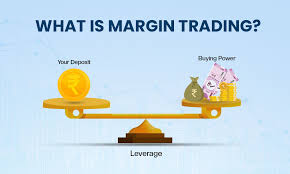
Margin Trading Facility (MTF) enables investors to buy stocks by paying a margin while the broker provides the remaining funds. This allows traders to take larger positions than they could afford with their own capital.
For example, if you want to purchase stocks worth ₹3 lakh but only have ₹1 lakh, you can use MTF. The ₹1 lakh will be your margin, while the broker provides ₹2 lakh as funding.
MTF is also known as margin funding, margin trading, buy now pay later, or pay later trading.
MTF vs Loan Against Securities
Although MTF is a type of loan for stock purchases, it differs from a loan against securities (LAS).
– LAS is offered by banks and NBFCs, allowing investors to use their securities as collateral to get a loan that can be used for any purpose.
– MTF, on the other hand, is provided by stockbrokers and can only be used for buying stocks.
How Does Margin Trading Facility Work?
Let’s break it down with an example:
Imagine you identify a stock that you believe will rise by 10% in a month. You wish to buy shares worth ₹5 lakh but have only ₹2 lakh in your brokerage account.
Option 1: Buy shares worth only ₹2 lakh
– If the stock rises by 10%, your holdings will be worth ₹2.2 lakh.
– If the stock falls by 10%, your holdings will be worth ₹1.8 lakh.
– Since you used your own money, you only incur brokerage and transaction taxes.
Option 2: Buy shares worth ₹5 lakh with MTF
– You invest ₹2 lakh, and the broker funds ₹3 lakh.
– Assume the broker charges 15% annual interest.
– If the stock rises by 10% in a month, your holdings increase to ₹5.5 lakh. After paying interest (1.25% of ₹3 lakh, i.e., ₹3,750), your effective holding value will be ₹5,46,250.
– If the stock falls by 10%, your holdings drop to ₹4.5 lakh. After interest deduction, the value becomes ₹4,46,250.
While MTF can enhance profits if your stock selection is correct, it can also magnify losses if the market moves against you.
Key Considerations Before Using MTF
Using MTF requires a solid understanding of the risks and rewards. Here are some key points to keep in mind:
– MTF is best suited for experienced investors. First-time investors may struggle to pick stocks and manage leverage.
– The expected return should be higher than the interest rate. If the stock’s return is lower than the broker’s interest rate, you may end up in losses.
– Stocks purchased with MTF need to be pledged. If you fail to pledge them, they will be considered fully paid stocks, and you may need to repay the entire amount immediately.
– MTF terms vary by broker. Check the broker’s policies, interest rates, and funding periods before opting for MTF.
– Using MTF on social media tips can be risky. Ensure you have strong research and conviction before using leverage.
# Conclusion
Margin Trading Facility can be a powerful tool for traders looking to capitalize on stock movements with limited capital. However, it is a double-edged sword that can amplify both profits and losses. Investors should carefully assess their risk appetite, repayment capacity, and market knowledge before opting for MTF.
*Disclaimer: This article is for informational purposes only and should not be considered investment advice. Investing in the stock market carries risks. Please consult a financial advisor before making investment decisions.